The Core Skills Every IT Professional Needs in the Modern Digital Era
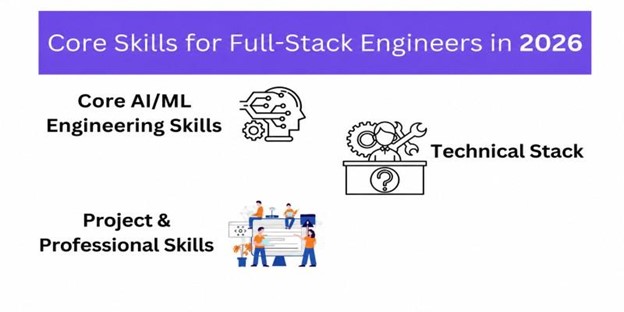
The global landscape has fundamentally transformed how tech infrastructures operate. Today, an Information Technology (IT) professional is no longer just someone who fixes office network routers or sets up hardware workstations. The modern tech landscape requires a dynamic blend of automated system administration, cognitive computational logic, cloud integration, and human-centric adaptability.
As enterprises migrate fully to hybrid ecosystems and algorithmic automations, the competencies expected of an entry-level technician have skyrocketed. Navigating this vast landscape requires structured, hands-on academic training. Academic structures such as the ADP Information Technology program at premier institutions like The University of Faisalabad are specifically built to target these market-driven needs. They compress years of technical evolution into intensive, career-oriented tracks designed to produce job-ready operators.
To remain competitive in today’s tech workforce, every aspiring IT professional must master a definitive suite of core modern skills.
Hybrid Infrastructure and Network Virtualization
Physical servers sitting in dark office closets are rapidly becoming an exception rather than the rule. Modern IT infrastructures rely heavily on virtualization and software-defined environments where physical hardware is partitioned into multiple virtual machines (VMs).
An IT specialist must understand how to spin up, configure, and monitor these virtual environments across varied computing clusters. This requires a deep comprehension of:
Hypervisors:
Managing physical host resources using systems like VMware ESXi or Microsoft Hyper-V.
Containerization:
Packaging software services together with all their dependencies using Docker so they run reliably across any infrastructure.
Software-Defined Networking (SDN):
Setting up virtual local area networks (VLANs), routing tables, and access control lists entirely through software control panels.
Without these isolation and routing mechanics, maintaining the scalability and uptime requirements of modern businesses becomes practically impossible.
Algorithmic Thinking and Automated Scripting
The days of manually checking log files or running manual system updates on individual computers are over. Automation rules the modern digital ecosystem, meaning that every modern IT professional needs a solid foundation in software development principles.
Before diving into complex automation workflows, a professional must understand structural logic, conditional flows, and data management. Developing these fundamental capabilities early on via the Fundamentals of Programming ensures that an administrator can write structured, reusable scripts rather than relying on messy, unpredictable command sequences.
Modern systems administrators routinely use scripting languages like Python or PowerShell to handle tasks such as:
- Parsing thousands of error log entries instantly to flag suspicious security alerts.
- Automating routine data backups across multiple offsite storage targets.
- Writing cloud deployment scripts that can configure an entire corporate server stack with a single command.
Understanding logic structures prevents errors from compounding across interconnected corporate platforms.
Cyber Defense Architecture and Zero-Trust Governance
Security is no longer a localized checkbox item or a task relegated to an isolated department. In a hyper-connected world, every network configuration, API connection, and user account creation presents a potential entry point for malicious threats.
The standard defensive perimeter has shifted completely toward a “Zero Trust” framework. This architecture operates under a simple, strict rule: never trust, always verify.
| Security Domain | Core Implementation Strategy | IT Professional’s Operational Focus |
| Identity Management | Multi-Factor Authentication (MFA) & Role-Based Access Control | Ensuring users have access only to the specific files required for their daily tasks. |
| Endpoint Protection | Automated Patch Management & Network Detection Tools | Ensuring all devices connected to the corporate server are updated against the latest exploits. |
| Data Integrity | End-to-End Encryption Protocols (TLS/SSL) | Protecting data while it is stored on servers and while it is traveling over the internet. |
A baseline understanding of threat matrices, behavioral analysis, and incident mitigation forms an essential pillar of everyday IT maintenance.
Database Optimization and Structuring
Data is the currency of the modern digital era, and it must be stored systematically to remain useful. An IT professional must be comfortable interacting with structured relational systems alongside scalable non-relational frameworks. This involves creating reliable database backups, establishing secure query structures, and monitoring read-write speeds to ensure applications perform optimally under load.
Mastering structured query languages (SQL) allows professionals to organize corporate archives cleanly, verify that customer data fields remain uncorrupted, and troubleshoot connectivity issues that crop up between front-facing applications and backend storage nodes.
The Acceleration of the Tech Economy
The demand for skilled operators has forced a major shift in how tech training is delivered. Academic institutions have adapted by replacing legacy theory with agile, practical curricula. For instance, universities in emerging tech hubs provide centralized, state-of-the-art laboratory ecosystems designed to mirror the actual network operations centers of multinational firms. This direct immersion reduces onboarding times and allows new graduates to manage corporate system architectures immediately upon entry into the professional marketplace.
Cloud Architecture (AWS, Azure, and GCP)
As computing moves away from local data centers, mastery of public and private cloud environments has become non-negotiable. Modern tech professionals must know how to deploy, manage, and audit corporate resources inside dominant cloud platforms like Amazon Web Services (AWS), Microsoft Azure, or Google Cloud Platform (GCP).
This skill set extends far beyond navigating a web dashboard; it demands an understanding of cloud economics and system resiliency:
Provisioning Resources:
Knowing when to deploy high-performance computing instances versus cost-effective, basic storage.
Load Balancing:
Configuring systems to automatically spread user traffic across multiple cloud servers during peak usage hours.
Disaster Recovery Planning:
Setting up real-time data replication so that if an entire geographic data center goes offline, a backup instance takes over instantly without interrupting users.
Technical Communication and Project Delivery
Even the most talented technical engineer will struggle if they cannot bridge the gap between complex code and everyday business objectives. IT professionals must regularly translate highly technical situations into clear, actionable updates for non-technical stakeholders, managers, or corporate clients.
Whether you are explaining why a system went offline or pitching a budget for a critical hardware upgrade, clear communication is essential. This includes writing scannable technical documentation, managing system updates using agile planning tools, and collaborating with cross-functional teams to deliver upgrades on time without disrupting operations.
Conclusion
The modern digital era does not reward static knowledge. The technical tools, cloud environments, and programming frameworks that dominate the industry today will inevitably evolve over the next few years. Because of this fast-paced cycle, the ultimate skill for any IT professional is the capacity for continuous adaptation and structured lifelong learning.
By mastering a balanced baseline of cloud architecture, automation logic, structural security, and database management, you construct a resilient professional framework. Entering this workforce with an agile mindset and specialized technical training allows you to stop merely reacting to digital disruption and instead positions you to actively drive the technological solutions of tomorrow.