


Principles of Graphic Design Workshop Inspires Creative Thinking
Enhancing Creative Skills Through Practical Learning
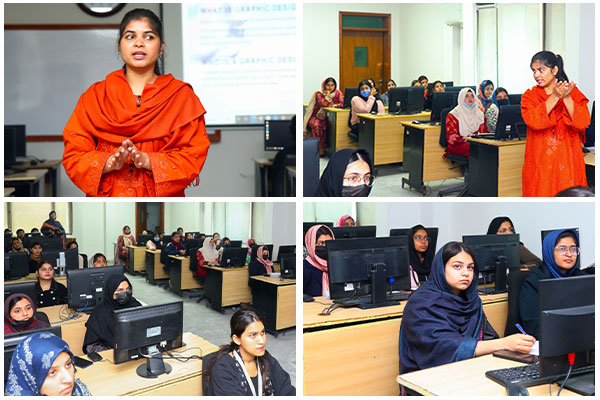
The University of Faisalabad organized a dynamic workshop titled “Principles of Graphic Design” aimed at helping students understand the core concepts and practical applications of graphic design. The event was designed to engage students with both theoretical knowledge and hands‑on experience, encouraging them to explore creative avenues in visual communication and design thinking.
Interactive Sessions and Expert Guidance
During the workshop, students participated in interactive sessions that covered essential design principles such as balance, contrast, alignment, repetition, hierarchy, and unity. These foundational elements were explained with practical examples to help participants learn how to create visually appealing and effective design layouts. The session sparked enthusiasm among attendees and motivated them to think creatively.
Hands‑On Design Activities
Students were given opportunities to apply what they learned through hands‑on activities where they practiced designing elements such as posters, banners, and digital graphics. These exercises allowed participants to experiment with different styles, color schemes, and composition techniques under guided supervision, helping them build confidence in their design skills.
Encouraging Innovation and Future Skills
The workshop emphasized the importance of graphic design in various fields, including marketing, branding, digital media, and communication. Students were encouraged to integrate design principles into their academic and professional projects to enhance visual impact and storytelling. The event reinforced the university’s commitment to fostering creativity, innovation, and practical skills that prepare students for future career opportunities.

Industry, Innovation, and Infrastructure at The University of Faisalabad
The University of Faisalabad actively supports the goal of Industry, Innovation, and Infrastructure by fostering collaboration between academia and industry to drive research, technological growth, and practical learning. Through modern facilities, industry-linked projects, and innovative programs, the university equips students with the skills needed to contribute to sustainable industrial development and future-ready infrastructure. These efforts help bridge the gap between education and the demands of the modern economy, promoting innovation-driven solutions that benefit both society and the broader development landscape.
