Study Abroad vs Study in Pakistan: A Complete Comparison
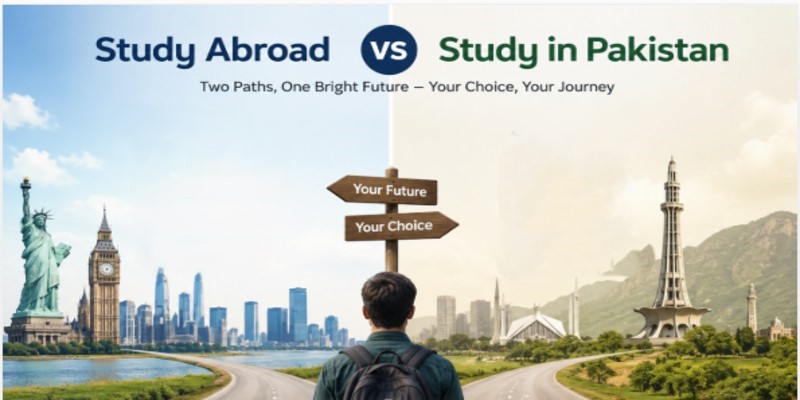
Choosing where to spend your university years is one of the biggest choices you will ever make. It is a decision that impacts your career trajectory, your family finances, and your personal growth.
Many students assume that traveling to a foreign country is always the superior option. However, local higher education standards have grown rapidly, and choosing between staying home and moving abroad is more nuanced than ever before.
The Financial Realities of International Education
The most obvious difference between these two educational paths is the financial investment required. Choosing a foreign university means dealing with international currency exchange, visa costs, and mandatory health insurance policies.
Living expenses in popular student destinations can put a major strain on a family budget. When you factor in the high cost of rent, food, and seasonal travel, an international degree can become a heavy financial burden.
The Cost Advantage of Staying Local
Pursuing your degree within Pakistan allows you to secure a premium education at a fraction of the global cost. You completely eliminate the stress of foreign currency inflation and high international conversion rates.
Staying local means you can live at home or utilize affordable student housing options. The money saved on tuition and living costs can be saved, used to fund your own business venture, or spent on a postgraduate degree later.
Building a Relevant Professional Network
A major benefit of completing your higher education locally is the immediate industry network you build. Your classmates, professors, and university alumni are all active participants in the regional economy.
When you study at a domestic institution like The University Of Faisalabad, you interact directly with local corporate heads. These connections make it much easier to secure high-quality internships and post-graduation jobs within the country.
Navigating the Challenges of Moving Abroad
Studying in a foreign country undoubtedly offers immense personal independence and a chance to experience new cultures. However, it also comes with a significant amount of initial culture shock and emotional isolation.
International students must learn to manage an entire household, cook their own meals, and balance a part-time job alongside hard academic deadlines. For some young adults, this intense lifestyle shift can take focus away from their actual studies.
Campus Comfort and Academic Focus
Studying in your home country provides a familiar, comfortable social environment. Having the daily support of your family and friends creates a stable foundation that allows you to focus entirely on your grades and skills.
You do not have to waste your energy worrying about visa renewals, strict part-time work hour limits, or shifting immigration laws. This peace of mind often leads to a more relaxed and successful academic experience.
Accessing International Standards on Domestic Campuses
You do not need to leave the country to experience global educational standards. Leading domestic institutions now offer state-of-the-art laboratories, modern computing clusters, and updated curricula that mirror Western universities.
Many institutions are actively building diverse student communities by welcoming international applicants into their programs. If you are an overseas student exploring local options, you can review the official structural guidelines directly on the INTERNATIONAL STUDENTS policy page.
Making Your Decision Based on Long-Term Goals
Your choice should ultimately align with where you plan to live and work after graduation. If your goal is to launch a local startup or join a top-tier Pakistani corporation, starting your professional journey at home is highly strategic.
If you are an international applicant or an expatriate looking for a streamlined way to apply to premium domestic programs, you can use the official International Student Query Form to get a personalized review of your eligibility.
Conclusion.
To wrap everything up, choosing between studying abroad and staying in Pakistan is not about finding a single correct answer, but about finding what fits your personal goals and financial reality. An international degree offers unmatched personal independence and a chance to experience new cultures firsthand, which can be an incredible life experience.
However, it also demands a massive financial sacrifice, high emotional resilience, and the ability to handle extreme lifestyle changes completely alone.
On the other hand, completing your higher education within Pakistan has become a highly competitive and strategic alternative. Top-tier domestic institutions now deliver the exact same modern laboratories, updated digital tools, and international curricula that you would find in Western universities, but at a fraction of the cost.
By choosing to stay local, you completely avoid foreign inflation, maintain a strong family support system, and build an immediate professional network within the regional economy that helps you secure jobs much faster.
Ultimately, your success in the modern workforce does not depend on the geographic location of your classroom, but on your personal dedication, technical portfolio, and drive to learn. If you want to experience the world without massive debt, a fantastic strategy is to finish your undergraduate degree successfully at home and then target fully-funded global scholarships for your postgraduate studies. Weigh your budget, evaluate your career goals, and select the educational foundation that will truly empower you to thrive.