The Impact of VR and AR on the Future of Medical Education
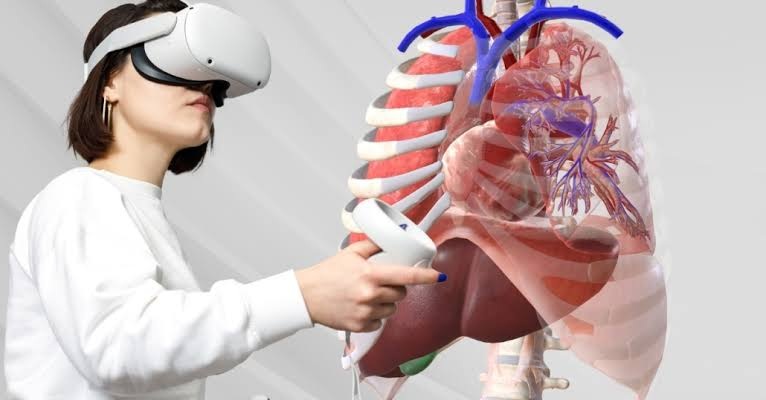
For decades, medical education has relied on textbooks, plastic models, and precious, limited hours in anatomy labs with cadavers. While these traditional methods have built the foundations of modern medicine, they come with physical and geographical limitations.
Today, a massive technological shift is happening. Virtual Reality (VR) and Augmented Reality (AR) are stepping out of the gaming world and into medical lecture halls, transforming how the next generation of healthcare professionals learn, practice, and heal.
Bridging the Gap in Anatomy & Complex Surgeries
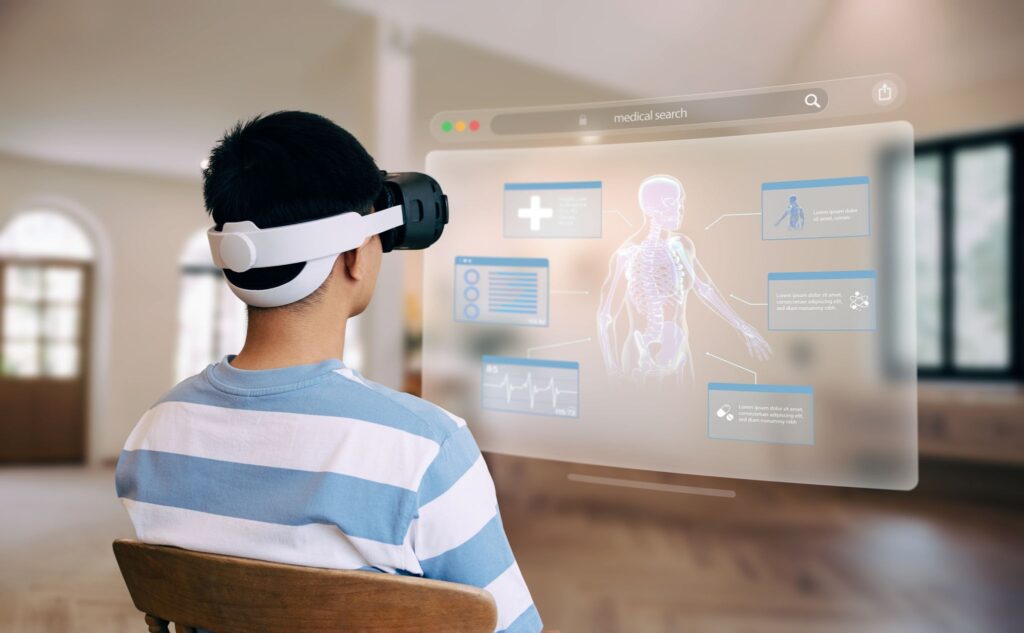
The human body is a highly complex, three-dimensional machine. Trying to fully understand it using 2D diagrams from a textbook is incredibly challenging.
Virtual Reality (VR)
Drops students directly into a fully immersive, 3D environment. They can virtually “walk” through a human heart, isolate a microscopic nerve, or zoom in on a complex bone fracture.
Augmented Reality (AR)
Overlays digital information directly onto real-world objects. For instance, a dental student wearing AR glasses can see a digital map of nerve pathways projected directly onto a physical dummy’s jaw.
Instead of studying a static image, surgeons-in-training can practice intricate procedures like neurosurgery or orthopedic implants dozens of times before ever touching a real patient. If they make a mistake in the virtual world, they simply hit “reset” and try again, eliminating patient risk.
The Tech Powering the Shift: Developing the Systems
Implementing these immersive medical platforms isn’t just about buying headsets. Behind every realistic virtual heart and interactive surgery simulator lies a massive framework of software engineering, 3D modeling, and real-time data processing.
To build, maintain, and innovate these simulation tools, the healthcare industry heavily relies on tech-savvy developers. This intersection of tech and health highlights why modern technical education must adapt. For instance, studying a program like the BS Information Technology prepares students to design, develop, and manage the very systems that are currently modernizing medical teaching tools. Without a strong IT infrastructure, VR/AR in medicine would remain a concept rather than a classroom reality.
Managing the Digital Transformation in Healthcare
While having cutting-edge VR and AR devices is incredible, integrating them into medical universities and clinical setups requires a deep understanding of administration, budgeting, and operations.
Integrating state-of-the-art simulators, training hospital staff, and evaluating the cost-to-benefit ratio of digital education programs is a massive management task. This is where specialized administrative leadership steps in. Acquiring a degree such as a BS Healthcare Management equips professionals with the strategic planning and organizational skills needed to implement these tech-driven advancements in modern medical centers and clinical institutes smoothly.
Shaping Tomorrow’s Leaders
The future of medical education is no longer confined to heavy textbooks and static lectures. It is interactive, risk-free, and deeply collaborative.
At The University of Faisalabad, we understand that the future of education is multidisciplinary. By bridging the gap between advanced medical training, cutting-edge technology, and expert organizational management, we are preparing students to thrive in an increasingly digitized world.
The integration of VR and AR in medicine is just the beginning. As technology continues to evolve, the boundaries of what is possible in healthcare and education will only continue to expand.
Conclusion
Ultimately, VR and AR are not just passing trends; they are the future of how we train our future healers, innovators, and leaders. By removing the barriers of physical classrooms and eliminating patient risk, these technologies are democratizing expert-level medical training. As we look ahead, the institutions that successfully blend these digital tools with core medical ethics, robust IT infrastructures, and strategic administrative planning will lead the next era of global healthcare. The era of passive learning is over; the future of medical education is interactive, immersive, and incredibly bright.