How to Prepare for Your First Professional Interview
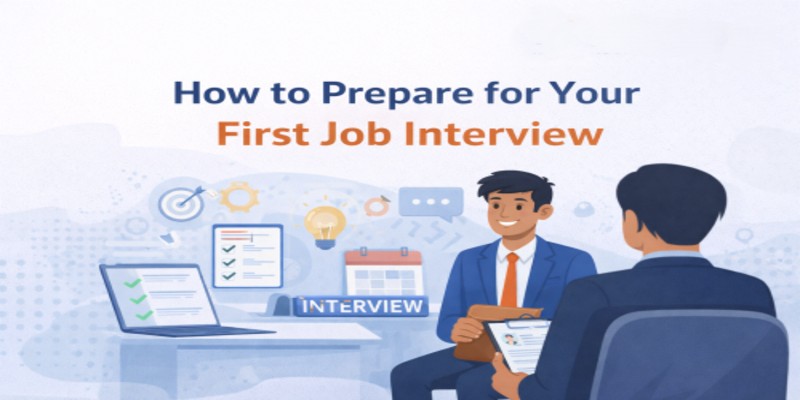
Walking into your first professional job interview can feel incredibly daunting. Up until this point, your academic life at The University of Faisalabad has been measured by exams, grades, and structured presentations. A job interview, however, introduces a completely different variable: human connection combined with professional evaluation.
The secret to conquering this milestone is realizing that an interview is not an interrogation. It is a mutually beneficial conversation designed to see if your current skills align with the company’s growth goals. With the job market evolving rapidly, securing a position requires a balance of old-school preparation and modern networking tools.
If you want to transition seamlessly from your degree to a competitive desk, this guide breaks down the precise, step-by-step strategy you need to follow.
Deconstruct the Job Description
Most candidates make the mistake of only reading a job description once before applying. To win an interview, you need to read it like a manual.
Companies give you the exact answers they are looking for right inside the job posting. Your task is to match your university experiences directly to their listed requirements:
Highlight Key Phrases
Look for recurring keywords like “data-driven,” “team management,” or specific technical frameworks.
Map Your Achievements
For every required skill, write down a concrete example from your university lab projects, thesis work, or extracurricular societies where you demonstrated that specific attribute.
Identify the Core Problem
Every job opening exists because a company has a bottleneck. Figure out what that bottleneck is, and position yourself as the solution.
Master the Behavioral Framework (The STAR Method)
When HR managers ask questions like, “Tell me about a time you handled a conflict within a team,” they aren’t looking for a vague narrative. They are looking for structured problem-solving.
The best way to deliver this is by utilizing the STAR Method:
| Component | Description | What to say |
| S – Situation | Set the context of the story. | “During my final year project at TUF, our group had to build an automated data tracker…” |
| T – Task | Describe the challenge or goal. | “Two weeks before the deadline, our lead coder fell ill, leaving us with incomplete modules.” |
| U – Action | Explain the exact steps you took. | “I stepped in, reassigned non-technical tasks to other members, and learned the basic debugging framework overnight.” |
| R – Result | Highlight the positive outcome. | “We delivered the project on time and achieved an A grade from the evaluation panel.” |
Audit Your Digital Footprint
Long before you shake hands or turn on your webcam, interviewers will look you up online. In 2026, a clean CV is only half the battle; your digital identity must match your professional ambitions.
Optimize Your LinkedIn Profile
Ensure your headline reflects your specialization rather than just stating “Student.” Use a professional portrait, write a compelling bio that states your career trajectory, and feature the major academic projects you completed during your studies.
Connect Directly with Industry Leaders
Landing an interview is significantly easier when you utilize the right recruitment channels. The university regularly hosts career matchmaking networks designed to bridge the gap between fresh graduates and regional corporate leaders. To get your profile in front of HR directors, read our breakdown on how Career Link 2026 actively connects ambitious students with top-tier companies.
The Checklist: 24 Hours Before the Interview
Success in an interview often hinges on eliminating unnecessary anxiety on the day of the event. Use this simple sequence to ensure you are fully prepared:
Verify Logistical Details
The morning before. Confirm the exact time zone, the name of your interviewer, and whether it is a physical location or a digital room (Zoom, MS Teams, or Google Meet).
Test Your Technical Stack:
The afternoon before. If virtual, test your webcam, mic clarity, and internet stability. Set up a neutral, distraction-free background with lighting that illuminates your face clearly.
Print and Organize
The evening before. For physical interviews, print three copies of your resume, your academic transcripts, and a reference list. Place them cleanly inside a professional folder.
Formulate Intelligent Questions
The night before, prepare 2 to 3 insightful questions for the interviewer. Ask about company culture, team structures, or upcoming corporate initiatives. Never ask about salary on the first round.
Elevating Your Professional Trajectory
The confidence to ace an interview starts long before graduation day. It is built by choosing an educational ecosystem that prioritizes practical exposure, mock interview clinics, and industry-aligned curricula from day one.
Choosing the right launching pad defines your early career speed. If you or someone you know is looking to build a rock-solid professional foundation backed by a globally recognized curriculum, head over to the official TUF Admission portal to explore undergraduate and postgraduate paths designed for the modern economy.
The Power of the Follow-Up Email
Within 12 hours of completing your interview, send a brief, personalized thank-you email to your interviewer. Reference a specific topic discussed during the conversation to show active listening. It takes less than two minutes but places you firmly at the top of their mind during final deliberations.
Conclusion
Your first interview isn’t a test of perfection; it is a test of preparation and authenticity. Dress professionally, maintain strong eye contact, speak clearly about your achievements, and acknowledge what you don’t know with a willingness to learn. By applying these strategies, you turn an intimidating corporate milestone into a natural, successful launchpad for your career.