Public vs Private Universities in Pakistan: What Students Should Know
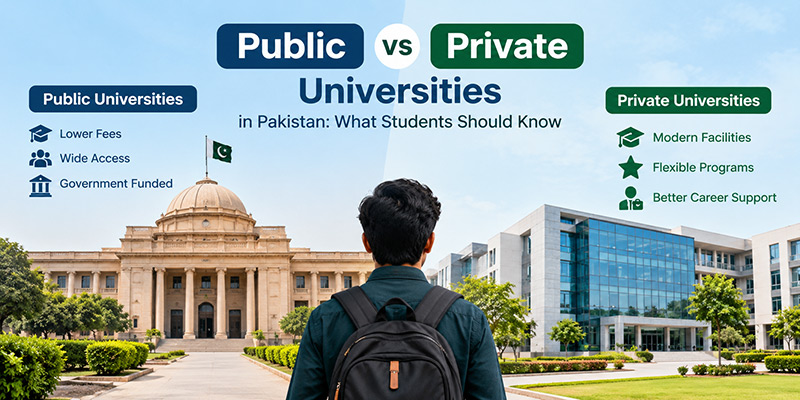
Choosing a university is an important step after intermediate. It can affect your education, skills, student life, and future career. In Pakistan, students can choose from public and private universities, but each institution may offer different fees, degree programs, facilities, and learning opportunities.
Understanding the public vs private universities in Pakistan comparison can help students and parents make a more informed decision. Instead of choosing a university only because of its name or fee, it is important to check what it offers and whether it matches your academic goals.
What Is the Difference Between Public and Private Universities?
Public universities are generally established and supported by the government. Private universities are usually established and operated by private organizations or sponsors. Both types can offer undergraduate and postgraduate degrees, depending on their approved programs.
However, their funding, fee structures, admission processes, and campus facilities can differ. These differences are not the same at every institution, so students should compare individual universities before applying.
1. University Fees and Affordability
The cost of education is one of the first things students consider when choosing a university.
Fees at Public Universities
Public universities may offer lower tuition fees for some programs because they receive government support. This can make them a suitable option for students who want to manage their education expenses.
However, fees can vary by university, degree, and student category. Some programs may have additional charges for laboratories, examinations, transport, or other services.
Fees at Private Universities
Private universities may charge higher tuition fees for certain programs. Their fee structures can depend on the degree, facilities, faculty, and other educational services they provide.
Some institutions also offer scholarships or financial assistance to eligible students. Before making a decision, students should check the complete fee structure rather than considering tuition fees alone.
2. Admission Requirements and Merit
Admission requirements are another important factor. Both public and private universities have eligibility criteria, and students must meet the requirements of their selected degree program.
Public universities may have strong competition for popular programs because many students apply for a limited number of seats. Admission decisions can depend on academic marks, entrance tests, interviews, or other requirements.
Private universities also set admission criteria. Depending on the institution and program, applicants may need to meet minimum academic requirements and pass an entrance test or interview.
Before applying, review the official admission information, required documents, application deadlines, and selection process. Never assume that every university follows the same admission rules.
3. Degree Programs and Career Goals
The right university should offer a degree that matches your interests and future plans. Some students want to study medicine or health sciences, while others prefer computer science, business, engineering, law, or social sciences.
When comparing institutions, check the available subjects, course outlines, program duration, practical learning opportunities, and future study options.
Students should also confirm that the university and their selected program have the relevant recognition or approval required for their field. This is especially important for professional degrees that may have additional regulatory requirements.
The University of Faisalabad (TUF), for example, offers undergraduate programs across several academic areas. Students can explore the undergraduate programs offered at TUF to review available study options and identify programs that match their interests.
4. Teaching Quality and Learning Environment
A university is more than its buildings or reputation. The quality of teaching and the support students receive can make a real difference to their learning experience.
Consider factors such as faculty experience, class size, access to learning resources, academic guidance, and opportunities to ask questions. A supportive learning environment can help students understand difficult subjects and develop confidence.
Public and private universities can both have skilled teachers and strong academic departments. The quality of education depends on the institution, the program, and the resources available to students.
If possible, attend an open day, visit the campus, or speak with current students and graduates to learn about their experiences.
5. Campus Facilities and Practical Learning
Facilities can also affect student life. Depending on the degree, useful resources may include libraries, laboratories, computer facilities, research spaces, sports areas, and student support services.
For programs that involve practical training, students should check whether the university provides suitable hands-on learning opportunities. Ask how practical sessions are arranged and whether students can gain experience related to their future profession.
Do not judge a university only by its campus appearance. Focus on whether its facilities support your selected program and help you develop the skills you need.
6. Scholarships and Financial Support
Scholarships can make higher education more affordable. Some universities provide financial support based on academic performance, financial need, or specific eligibility conditions.
Public and private institutions may have different scholarship policies, so students should check the available options directly with each university. Read the eligibility rules carefully and confirm whether a scholarship covers full tuition, part of the fee, or other expenses.
Families should also prepare a realistic budget that includes transport, accommodation, books, meals, and other study-related costs.
7. Student Life and Career Opportunities
University life includes more than lectures and examinations. Student societies, workshops, seminars, internships, research activities, and career guidance can help students improve their communication, teamwork, and problem-solving skills.
These opportunities vary across institutions. Ask about career services, industry connections, alumni support, and practical activities related to your chosen field.
Students should also consider the university’s location, daily travel time, hostel availability, and campus environment. A university that fits your academic needs and personal circumstances may be a better choice than one selected only for its reputation.
How to Choose the Right University in Pakistan
Before making your final decision, compare your shortlisted universities using a few simple questions:
- Does the university offer my preferred degree program?
- Do I meet the admission requirements?
- Can my family manage the complete cost of education?
- Is the university and the selected program appropriately recognized?
- Does the program provide the learning resources and practical experience I need?
- Are scholarships or other financial support options available?
- Can I manage the location, transport, or accommodation?
- Does the university support my future career or further study plans?
For official information, students can check the HEC-recognized universities and verify whether their chosen university or campus is recognized. For certain professional degrees, they should also confirm approval from the relevant professional council.
For accurate details about applications, eligibility, and admission procedures at TUF, visit the TUF admissions page. Check the latest official information before submitting your application, as requirements and deadlines can change.
Conclusion
There is no single answer for every student when choosing between public and private universities. The best option depends on your preferred degree, academic record, budget, location and career goals.
A careful public vs private universities in Pakistan comparison can help you understand your options and avoid making a decision based only on fees or reputation. Research each institution, confirm its program details and discuss the available choices with your family and teachers.
The right university is one that offers a suitable degree, meets your educational needs, and helps you prepare for the future you want to build.