How to Choose the Right Degree After Intermediate in Pakistan
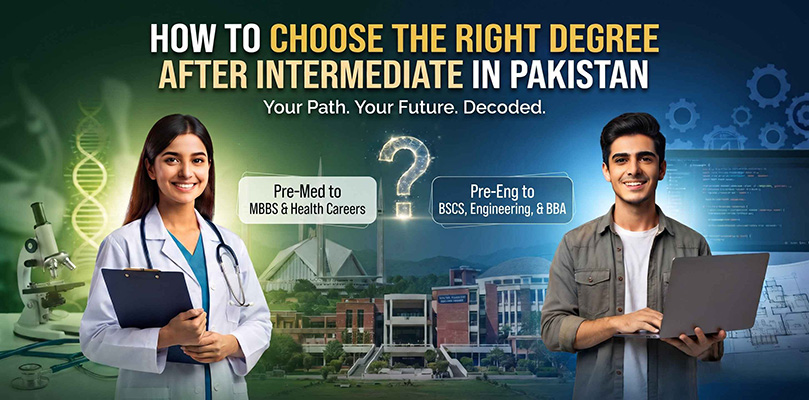
Choosing a degree after intermediate is an important decision for students in Pakistan. After completing FSc, ICS, ICom, FA or another intermediate program, students have many degree options. It can be difficult to decide which field is suitable for your interests, skills and future plans.
A degree is more than just a qualification. It can help you build useful skills, prepare for a career and open new opportunities. That is why students should take some time to understand their options before making a final decision.
This guide explains how to choose the right degree after intermediate and what important factors students should consider before applying to a university.
Understand Your Interests and Strengths
The first step is to understand what you enjoy learning and what you are good at. Your interests can give you a better idea about which degree may suit you.
For example, students who enjoy biology and want to work in healthcare may consider fields such as MBBS, BDS, Doctor of Physical Therapy, Pharmacy or other health-related programs. Students who enjoy mathematics, computers and technology may explore Computer Science, Software Engineering, Artificial Intelligence or related programs.
Your marks are also important, but they should not be the only factor. Think about the subjects you enjoy, the type of work you like and the skills you want to develop.
Ask Yourself These Questions
Before choosing a degree, ask yourself:
- Which subjects do I enjoy studying?
- What are my strongest subjects?
- Do I prefer practical work or theory?
- Do I enjoy working with people, technology, numbers or ideas?
- What type of career would I like in the future?
- What skills do I want to develop?
These simple questions can help you narrow down your choices.
Consider Your Intermediate Background
Your intermediate group can affect the degree programs available to you. Students should check the admission guidelines of each program before making a decision.
FSc Pre-Medical
Students with FSc Pre-Medical can explore healthcare and life-science programs. Depending on university requirements, options may include MBBS, BDS, DPT, Pharmacy, Biotechnology, Nutrition and other related fields.
FSc Pre-Engineering
Students with Pre-Engineering may consider Engineering, Computer Science, Architecture, Mathematics, and other science-related programs, depending on the university’s eligibility criteria.
ICS
ICS students often consider Computer Science, Software Engineering, Information Technology, Artificial Intelligence, Data Science and related programs.
ICom
ICom students can explore fields such as Accounting and Finance, Commerce, Business Administration, Economics and other business-related programs.
FA and Other Groups
Students from FA and other intermediate backgrounds can explore programs in humanities, social sciences, education, media, business and other fields according to their interests and university eligibility requirements.
Always check the current admission criteria of the university because requirements can differ between degree programs and institutions.
Look at Career Options Before Choosing a Degree
A degree should connect with the type of career you want to build. Before applying, research the jobs and career paths linked to your selected field.
For example, a Computer Science degree can lead to careers in software development, web development, data-related work, cybersecurity and other technology areas. A business degree can provide opportunities in management, marketing, finance, sales, and entrepreneurship.
When exploring career options after intermediate, do not focus only on the job title. Look at the skills required, typical work environment, further education options and areas where you may want to grow.
Choose a Degree Based on Your Interests and Skills
Students should choose a degree based on your interests instead of selecting a program only because friends or relatives are choosing it.
A popular degree may not be the right choice for every student. Your learning style, abilities, interests and long-term goals are different from those of other students.
For example, if you enjoy helping people and have a strong interest in healthcare, a health-related program may be worth exploring. If you enjoy solving technical problems and working with computers, a technology-related degree may be a better match.
The goal is to find a field where you can learn, improve your skills, and stay interested in your studies.
Research the Degree Program Carefully
Before selecting a program, understand what you will actually study during the degree.
Check:
- Course subjects and curriculum
- Program duration
- Practical training opportunities
- Internship options
- Laboratory or clinical facilities
- Skills taught during the program
- Further study opportunities
- Career paths related to the degree
This step can help you understand whether the program matches your expectations.
Students should also compare the course outline of similar programs. Two degrees may sound similar but can have different subjects, practical training and career paths.
Think About Your Future Career Goals
Your future career goals should be part of your degree decision. You do not need to have your entire career planned at this stage, but you should have a general direction.
For example, if you want to work in healthcare, explore programs that provide the education and practical experience needed for your desired role. If you want to enter the technology sector, look at degrees that build relevant technical and problem-solving skills.
Your plans can change later and that is normal. The important thing is to make a thoughtful decision based on the information available to you.
Compare Universities Before Applying
Choosing the degree is only one part of the decision. You should also research the university offering the program.You can explore TUF undergraduate programs to review available degree options and compare them with your interests and academic goals.
Consider factors such as:
- Accreditation and recognition
- Faculty and teaching quality
- Curriculum and learning resources
- Laboratories and practical facilities
- Clinical or industry exposure
- Student support services
- Scholarships and financial options
- Location and campus environment
- Internship and career support
You can also check information from HEC Pakistan when researching higher education, recognition and university-related information.
A university that offers your preferred degree should also provide a learning environment where you can develop useful academic and practical skills.
Consider the Cost of Your Education
Education costs are another important factor. Before applying, understand the total expected cost of the degree.
Look beyond tuition fees and consider expenses such as transportation, accommodation, books, uniforms, laboratory charges and other university costs where applicable.
Also check whether the university offers scholarships, financial assistance or other fee support options. Planning your education budget early can make the admission process easier for you and your family.
Talk to Students and Professionals
Speaking with people who are already studying or working in your chosen field can give you useful information.
You can talk to:
- Current university students
- Graduates
- Teachers
- Career counselors
- Professionals working in the field
Ask them about their study experience, practical training, skills, challenges and career opportunities. Their experiences can help you understand what the field is really like.
However, make your final decision after considering several sources of information rather than depending on one person’s opinion.
Avoid Choosing a Degree Only Because It Is Popular
Popularity should not be the main reason for selecting a degree. A program may be popular among students, but that does not automatically mean it is suitable for you.
During degree selection after intermediate, focus on the connection between your interests, abilities, education plans and career goals.
A thoughtful decision can help you stay motivated during your studies and prepare for the type of work you want to do.
Make a Simple Comparison Before Your Final Decision
After researching different programs, make a simple comparison. Write down the degrees you are considering and compare them based on your own needs.
You can compare:
Interest: Do I enjoy this subject?
Eligibility: Can I apply for this program?
Skills: What skills will I learn?
Career: What career paths can it support?
Cost: Can I manage the education costs?
University: Does the university offer suitable facilities?
Future Study: Can I continue with higher education?
This can make your decision more organized and easier to understand.
Take Your Time Before Making the Final Choice
There is no need to select a degree simply because your friends have already decided. Take time to research your options, check admission requirements, compare universities and understand the field.
If you are still unsure about the best degree after intermediate in Pakistan, remember that there is no single degree that is suitable for every student. The right choice depends on your interests, academic background, skills, financial situation and career plans.
Conclusion
Choosing a degree after intermediate is an important step toward your higher education and future career. Start by understanding your interests and strengths, then explore suitable programs and their admission requirements.
Research the subjects, practical learning, career paths, university facilities and education costs before applying. Talk to students and professionals to learn from their experiences, but make your decision according to your own goals.
Most importantly, do not choose a degree only because it is popular or because someone else recommends it. A well-researched decision can help you select a program that matches your interests and gives you a strong foundation for your future.
Want to explore more study and career guidance? Visit our blogs for more useful information and helpful tips for students.