Why Integrated STEAM Education is Crucial for Pakistan’s Next Generation of Innovators
Pakistan stands at a pivotal point in its educational development. With one of the world’s largest youth populations, the country possesses immense potential to drive economic growth, technological advancement, and creative problem-solving. However, traditional educational models that rely heavily on rote memorization are no longer sufficient to prepare young minds for an increasingly complex global economy.
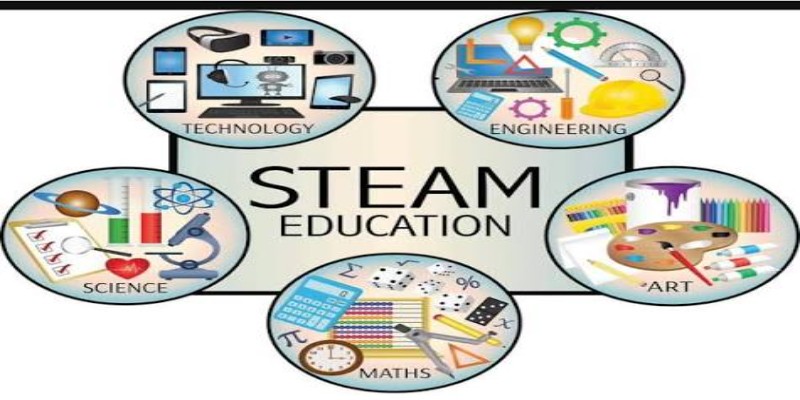
To build a resilient future, Pakistan must shift toward Integrated STEAM Education, an approach that seamlessly merges Science, Technology, Engineering, Arts, and Mathematics into a unified learning experience.
Moving Beyond Rote Learning to Critical Thinking
For decades, classroom instruction across Pakistan has prioritized theoretical recall over practical application. Integrated STEAM education replaces passive learning with inquiry-based, hands-on exploration. Instead of learning scientific principles or mathematical equations in isolation, students use them together to build real-world solutions such as designing renewable energy devices, developing clean water filtration setups, or writing software algorithms.
Leading academic initiatives, such as TUF Steam, are advocating for this pedagogical transition by equipping students with interdisciplinary tools that turn abstract concepts into tangible innovations.
The Power of “Arts” in Scientific Innovation
While traditional STEM fields provide the technical muscle, the inclusion of Arts (A) introduces essential human-centered elements: creativity, design thinking, ethics, and communication.
Human-Centered Design
Technology must be user-friendly and culturally relevant to solve societal problems.
Creative Problem-Solving
Artistic discipline teaches students to think outside established boundaries and approach technical hurdles from new perspectives.
Effective Storytelling
Innovators must articulate their ideas clearly to secure funding, build industry partnerships, and influence public policy.
By connecting technical rigor with artistic intuition, young Pakistani researchers and entrepreneurs can build products that are not only functional, but also intuitive and impactful.
Addressing Local Challenges with Global Relevance
Pakistan faces distinct socio-economic and environmental challenges ranging from climate vulnerability and agricultural water scarcity to healthcare accessibility. Solving these issues requires professionals who do not operate in academic silos.
An integrated STEAM framework enables agriculturalists to collaborate with software engineers, healthcare workers to work alongside data analysts, and artists to shape public health campaigns. Institutions like The University of Faisalabad are actively fostering these cross-disciplinary ecosystems to ensure academic research directly serves community needs and national development goals.
Preparing Youth for the Global Knowledge Economy
Automation, Artificial Intelligence, and digital transformation are changing global labor markets. Many repetitive jobs are disappearing, while demand is surging for professionals skilled in coding, systems thinking, environmental science, and digital design.
An integrated STEAM education ensures Pakistani graduates do not merely compete for existing jobs, but create new ones by founding startups, leading tech ventures, and driving social enterprise.
Conclusion
Empowering Pakistan’s next generation of innovators requires a deliberate, nationwide commitment to interdisciplinary learning. By dismantling traditional subject barriers and uniting technical disciplines with creative arts, we can inspire a generation capable of solving complex local and global challenges.
To explore international research opportunities, interdisciplinary forums, and collaborative academic programs, visit the official portal at steam. and join the global movement toward future-ready education.