Career Opportunities in Data Science for Pakistani Students
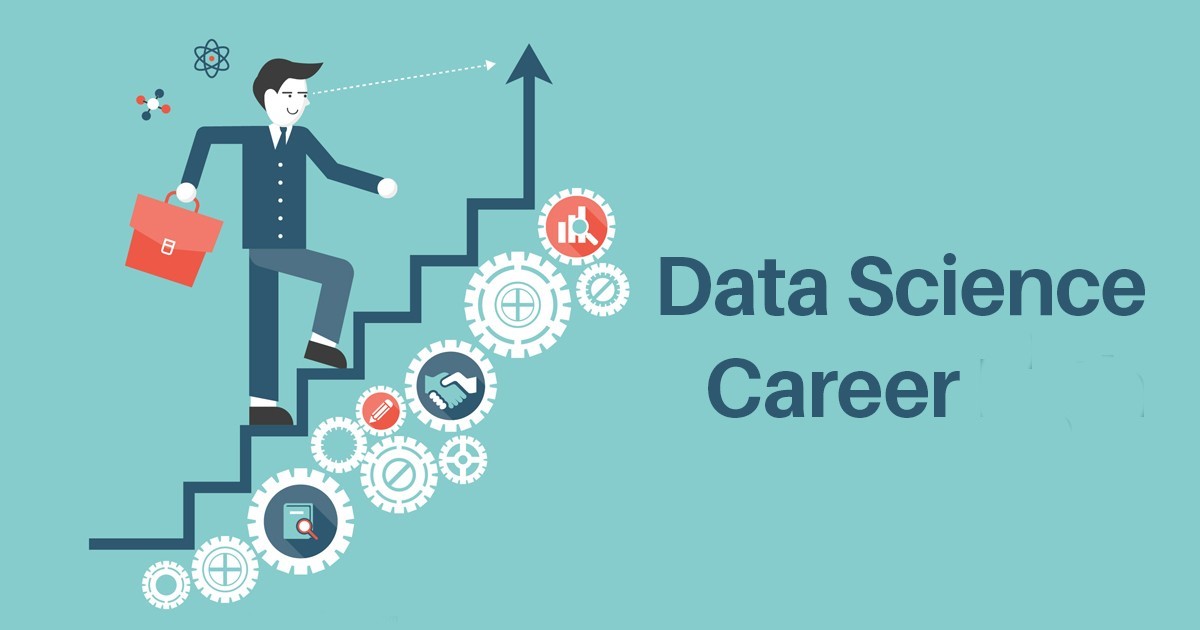
The global digital economy is entirely fueled by data. Every time a consumer streams a video, a bank processes a transaction, or a logistics company optimizes a delivery route, massive amounts of digital information are generated. Because of this, companies no longer suffer from a lack of data; instead, they are struggling to find professionals who can make sense of it.
For Pakistani students, this data explosion has opened up an unprecedented career frontier. Data science has quickly emerged as one of the most lucrative, stable, and rapidly growing fields in the tech sector.
Whether your goal is to lead tech transformation within Pakistan’s top corporations or build a remote career working for multinational tech firms, a foundation in data analytics is your passport to the modern workforce.
Why Data Science is a Game-Changer for Pakistan
Historically, entering international tech markets required physical relocation. Data science has fundamentally broken that barrier. Because data sets can be accessed, cleaned, and modeled from anywhere in the world, Pakistani data scientists are uniquely positioned to compete on a global stage right from their home offices.
The local market is expanding just as quickly. Pakistani banks, telecommunication giants, e-commerce platforms, and agricultural tech startups are aggressively hiring data talent to help them optimize operations, cut costs, and predict consumer behavior.
To understand how global research and development paradigms are shifting toward a borderless digital workforce, take a look at our detailed breakdown on Data Science, which highlights how specialized analytics are driving international corporate innovation.
Core Career Paths in the Data Ecosystem
Data science isn’t a single job title; it is an ecosystem of interconnected roles. Depending on whether you enjoy mathematics, coding, or business strategy, you can specialize in several distinct paths:
| Role | Core Responsibility | Key Technical Stack |
| Data Analyst | Cleans raw data and builds visual dashboards to help managers make day-to-day business choices. | SQL, Excel, Power BI, Tableau |
| Data Scientist | Uses statistical models and predictive algorithms to forecast long-term market trends. | Python, R, Predictive Modeling |
| Machine Learning Engineer | Builds and deploys self-learning AI systems and automated pipelines. | TensorFlow, PyTorch, MLOps |
| Data Engineer | Designs the backend architecture and pipelines that store and transport massive datasets safely. | Cloud Infrastructure, AWS, Apache Spark |
The Roadmap to Becoming a Data Scientist
Breaking into this highly competitive field requires a structured learning path. You cannot master data science overnight, but you can build a formidable portfolio by following a clear, step-by-step sequence during your university years:
Master Foundational Mathematics & SQL: Months 1-3.
Start by building a solid grip on linear algebra, calculus, and basic probability. Concurrently, learn SQL (Structured Query Language) so you can smoothly extract data from relational databases.
Learn Python and Core Data Libraries: Months 4-6.
Pick up Python as your primary programming language. Master essential data manipulation libraries like Pandas (for data cleaning) and NumPy (for numerical computing).
Dive into Exploratory Data Analysis (EDA): Months 7-9.
Practice taking messy, real-world datasets from open sources like Kaggle. Clean the data, find hidden trends, and visualize your insights using charts and graphs.
Build and Deploy Machine Learning Models: Months 10+.
Progress to training predictive models (like regressions or classification algorithms). Document your complete code on GitHub to create a public portfolio that recruiters can verify.
Securing an Industry-Aligned Education
Because data science tools and frameworks evolve rapidly, classroom learning must be backed by modern computing labs and hands-on project experience. Learning theoretical code on paper simply won’t cut it in a technical interview.
At the University of Faisalabad, the computing curricula are explicitly structured to match these modern corporate expectations. Students don’t just learn abstract concepts; they build real-world databases, work on cloud-based predictive models, and solve localized data problems under expert academic supervision.
For prospective students looking to position themselves at the forefront of this digital gold rush, you can view available computer science, AI, and data analytics tracks along with application deadlines on the official TUF Admission portal.
The Freelance Advantage for Students:
Data analytics is one of the highest-paying categories on global freelance platforms like Upwork and Fiverr. As an undergraduate student, you don’t have to wait for graduation to earn. Mastering data visualization tools like Power BI allows you to take on global freelance gigs, build an international portfolio, and earn in foreign currency while completing your studies.
Conclusion
The demand for skilled data professionals in Pakistan is vastly outstripping the supply. Companies are actively looking for young minds who can turn raw, confusing digital noise into clear, profitable business strategies. By committing to learning the core programming languages, practicing on real-world datasets, and aligning your education with an institution that understands tech trends, you can secure a future-proof career that knows no geographic boundaries.